.png)
Podcast
001 - The Three Conversations We're Having Wrong
August 4, 2026
For years, we've been told that video should be "cheap, fast, or good: just pick two." We think that's nonsense.
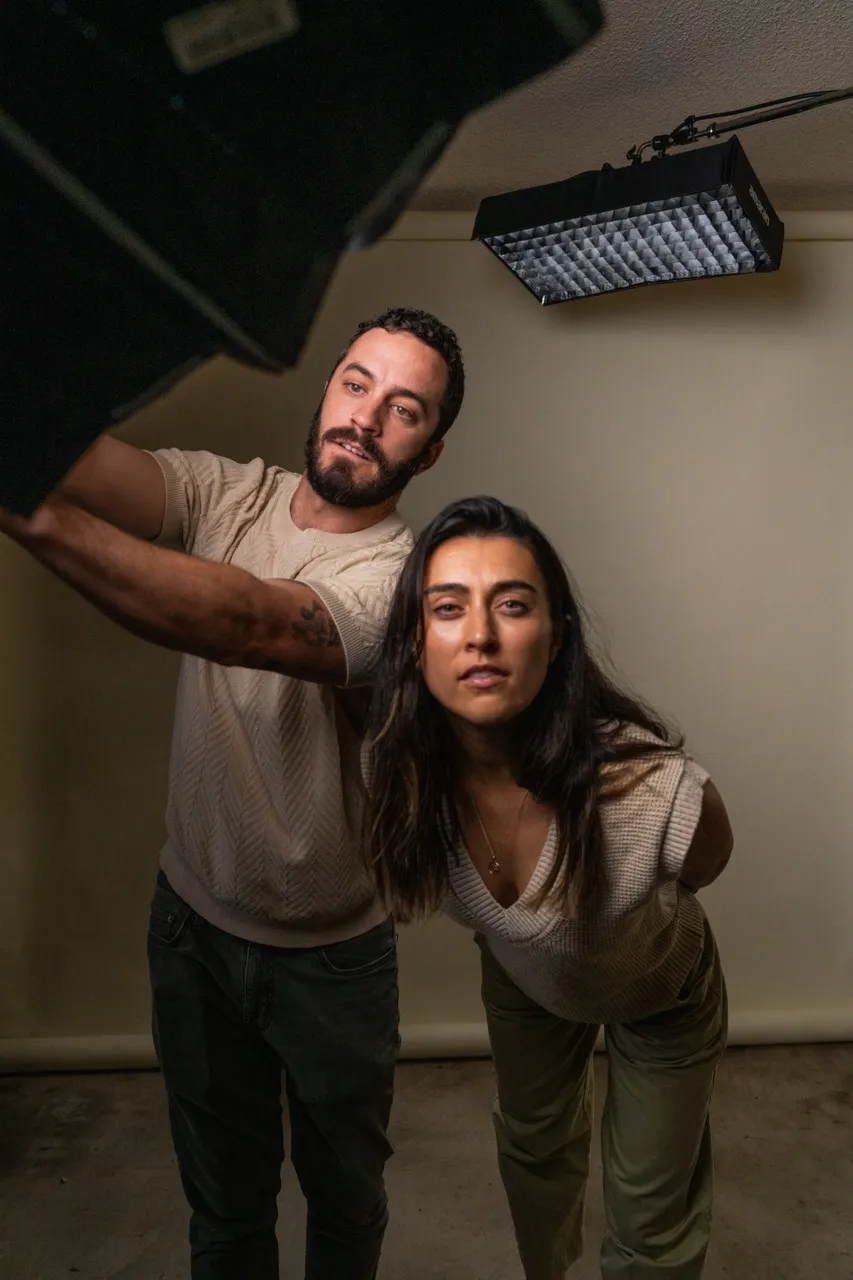
In this launch episode of Call Us Disruptors, we share how we went from careers in the performing arts to building a video production company focused on business outcomes first. We break down what's wrong with the traditional agency model, why so many expensive videos fail to perform, and how measurement, AI, and modern marketing have completely changed what brands should expect from video.
We dig into why the traditional playbook is obsolete, and why brands should shift to content systems built for testing and iteration instead of high-cost, one-off agency productions.
If you're a marketer, agency leader, brand operator, or anyone responsible for making video actually drive results, this episode lays the foundation for everything to come.
Time jump links
- 00:00:00 Why the traditional video production model is broken
- 00:06:30 How we built Savvy as a strategy-first video company
- 00:09:50 The agency story that exposed broken marketing decisions
- 00:13:39 Why one-off video production doesn't work anymore
- 00:18:00 How measurement changed everything
- 00:27:15 What future guests and topics will explore
Key takeaways
- Great video should be measured by whether it did the job it was supposed to do.
- Modern brands need content they can test, iterate on, and use across channels.
- The best production partners start with business goals before the camera ever comes out.
Show notes
- Learn more about Savvy Studios
- Connect with David Siciliano
- Connect with Jess Siciliano
Full transcript
David Siciliano (00:00): The video triangle goes like this. Cheap, fast, good. And you can pick two. This doesn't make any sense because everything has changed in the world of marketing and that model no longer applies, but it's how video production is still operating because they are so far removed from what the business is needing to do nowadays. We're having different conversations now. This is Call Us Disruptors.
Jessica Siciliano (00:25): A show for the agencies, the marketers, the brand-side leaders who are done pretending that pretty video equals performing video. We're David and Jess.
David Siciliano (00:34): And this is Call Us Disruptors.
Jessica Siciliano (00:36): Okay. Let's get into it. We are a video production company.
David Siciliano (00:00): The video triangle goes like this. Cheap, fast, good. And you can pick two. This doesn't make any sense because everything has changed in the world of marketing and that model no longer applies, but it's how video production is still operating because they are so far removed from what the business is needing to do nowadays. We're having different conversations now. This is Call Us Disruptors.
Jessica Siciliano (00:25): A show for the agencies, the marketers, the brand-side leaders who are done pretending that pretty video equals performing video. We're David and Jess.
David Siciliano (00:34): And this is Call Us Disruptors.
Jessica Siciliano (00:36): Okay. Let's get into it. We are a video production company.
David Siciliano (00:41): Yep. We're a video production company grounded in strategy and business outcomes first. What does this mean? This means that before we do anything creative, we want to align with your business goals, the repeatable resources, what your target audience is consuming other than your product, and how best to optimize those things for the project.
Jessica Siciliano (01:01): In other words, we just ask a lot of questions.
David Siciliano (01:03): We do ask a lot of questions.
Jessica Siciliano (01:05): Before a camera is ever seen.
David Siciliano (01:07): Yeah. Our core philosophy is fuck the triangle.
Jessica Siciliano (01:11): Do you want to talk more about that?
David Siciliano (01:13): Yes. This is my favorite thing ever. Traditionally, the video triangle goes like this: cheap, fast, good, and you can pick two. This doesn't make any sense because everything has changed in the world of marketing and that model no longer applies, but it's how video production is still operating because they are so far removed from what the business needs nowadays that they have no idea. We're having different conversations now. Business owners are in the world of AI, of automation, of measurement, and video production is still in the world of you spend 300 grand on one video and then you wait till next quarter for your next project. Things have changed a lot. And so we created our company to try to bring that gap closer together.
Jessica Siciliano (02:08): So this is our second career, both you and I. We used to be performers.
David Siciliano (02:12): What were you doing before, Jaz?
Jessica Siciliano (02:13): I was a singer and a dancer.
David Siciliano (02:15): On the West End.
Jessica Siciliano (02:16): And all over the world. Yes. I did that from probably the age of three until the age of 28. And then I hung up my dancing shoes and moved to the US.
Jessica Siciliano (02:32): What were you doing before this?
David Siciliano (02:34): I really liked acting when I was a kid because I just enjoyed that hang. And then someone told me I had to go to college and I said, "Well, I might as well keep doing the thing that was fun." And then in college they said, "You're trying to get a career, right." And I said, "I guess so." And then I had an agent and I was working in New York and absolutely hated it. But the whole time I was doing video production.
Jessica Siciliano (03:03): In what capacity?
David Siciliano (03:05): I produce, cast, write, shoot, edit. I did a journalism broadcast thing. I made stop-motion animation videos of my Legos.
Jessica Siciliano (03:15): Video production has always been a hobby for you?
David Siciliano (03:20): Well, until I switched careers, I said, "I really don't like this. Why am I doing this? I don't actually even want to have a career in this."
Jessica Siciliano (03:37): When you went to agencies?
David Siciliano (03:39): Yeah, I made a short film and a friend of mine, who had cast me in a play but was actually a producer at a big agency in New York, one of the most well-known agencies in the world, said, "Oh, cool. Are you producing?" And I said, "Oh yeah, I'd love to get a job doing it at some point. I think that's what I want to do next." And she said, "Oh, I'll give you a job." Had no idea the agency was a big deal until I was there working on Budweiser, Eddie Bauer, Mountain Dew, Quaker, GE, HP, all these premium brands. And that was where I got my start producing. And then I said, "Oh, hang on a second. I've been doing this my whole life. I'm getting paid more in a day than I did in a month at some months in my other career. And I also like it. I should probably do this."
Jessica Siciliano (04:27): You're also very good at it. You are very process oriented.
David Siciliano (04:32): Very process oriented. I'm a mix of left brain and right brain. I really like creative stuff, but I like process. You're very good at it too. How did you get into this second career?
Jessica Siciliano (04:41): I was trying to figure out what I wanted to do as a second career because my body was so broken from dancing. I was like, "I need to not do that anymore to myself."
David Siciliano (04:50): Your chiropractor actually told you you had the body of an 80-year-old.
Jessica Siciliano (04:52): I did. Yeah. So my body was so broken from my first career, and then when I moved here, I didn't really know what I wanted to do. And then I just joined you on set one day. And I remember just being like, wow, I just used every single part of myself: organizing, seeing things that no one else sees, making sure everyone's okay, making sure everyone's safe, making sure whatever needs to get done gets done, and just being around people and making sure that people get what they want.
David Siciliano (05:38): And that project, the First AD had to step away. We needed a generator for a night thing and it fell through. And so you just kind of took over as first AD. My first AC on that set was like, "Is your wife a first AD?" I said, "No, she's never done this before." And he was like, "She's amazing." You just naturally did it.
Jessica Siciliano (06:07): Yeah. And then I'd tag along, help you out. I instantly fell in love with it. And you don't know if you're going to work well with your partner until you work with them. And I think we just always worked so well with each other. As we worked on communication as a married couple, we were like, "Ooh, we can do this as business owners too."
David Siciliano (06:38): Totally. And people seem to like it. At some point we decided we should make our own company. We saw that there's a status quo out there between agencies, brands, and video production, and they're all having different conversations, different needs, and the landscape's changing. I think we can make a pretty cool approach to this process that is more streamlined, still really good quality, tied to business outcomes. We work well together. You, as a former dancer, are great with movement directing, working with talent, you're so good with people and with clients. And then I have more of the technical side and the process side. So we said, "Let's make our own thing." The big brain.
David Siciliano (07:15): And you're the one with the big heart.
Jessica Siciliano (07:19): I'll take it.
David Siciliano (07:22): And then it's kind of grown. Last year we hired 600 people, most of them for a day, as actors or crew, but we've grown quite a bit.
Jessica Siciliano (07:31): Don't belittle that comment. That's a lot of people.
Jessica Siciliano (07:35): We've niched down. We were doing all sorts of things. We still do all sorts of things, but we do shoots for all different types of companies.
David Siciliano (07:44): We have an approach now that is pretty like, this is our approach, this is what it yields, and then here's the results to prove it.
Jessica Siciliano (07:54): And we like to remain with a brand to know what the outcome was, to better our company.
David Siciliano (08:01): Well, if the project is a success, then you can measure it and it makes more sales, and then you want to work with us again. So we try to align ourselves with that. We're not trying to make all of our money from one project and then see it later. We want it to be a relationship that builds over time. Many agencies are bloated, overpriced, slow, very into the creative ideas more so than the business goals. Agencies are kind of optimized for creative awards, traditionally, as opposed to being oriented like our favorite partners. We work with Mountain quite a bit and they're more oriented on measurable results. They're not really an agency, they're a publisher, but I put them in that category and they're more oriented on, we want results. In fact, they give you free managed services just because they really want the videos to perform. That's very new though, and that's not a lot of agencies. Traditionally agencies are for how cool the creative idea is; they're not really optimized for the business goals typically.
Jessica Siciliano (09:03): Yeah. There's not really any transparency with anything in some of the bigger, older agencies.
David Siciliano (09:10): But they're just not motivated to. It doesn't even have to be a knock on them. They're not motivated to align themselves to the business's goals.
Jessica Siciliano (09:19): But I do feel like they lose businesses because of it.
David Siciliano (09:24): And I think that model is dying because of it, which is why some of these other agencies are shifting and able to provide more for less. Originally, in the very, very beginning, I had heard this story so many times that it was the story I told of why we created Savvy for a while. I was working at one of the top agencies in the world, very recognizable. I will not name them. My client was a beer brand that does a lot of advertising. It's very recognizable. They were running a limited-time run of a beer. They had a certain amount of it they needed to sell. It was just for the holidays during football season. They wanted a 30-second ad to play during linear TV football season. So they're not going to be able to measure it very well. This was 10 years ago. They shoot the ad, it comes to me. I'm the post producer. We edit it. I work with the editor, the colorist, the mixer and all that stuff. We're working on the score. We put in some stock because I had a budget of like 2,500 or 1,500 for stock music. I present some options.
David Siciliano (10:31): "What are you feeling? What are you liking? What aren't you liking?" "Yeah, we're just not liking anything. We really like the song from the animatic."
Jessica Siciliano (10:38): Which is an animated storyboard that's kind of the whole commercial in animated form.
David Siciliano (10:44): Yeah. It's like a hand-drawn animation, very simple, with music. And they had done that process in pre-production to show a bunch of concepts to the beer brand, which in itself is just a lot of money spent on something that doesn't seem very worth it, but whatever, it's big agency, that's how they do it. So that department is in a different building, in a different borough in New York. So I call them and I'm trying to figure out, okay, who made the animatic? Where'd you get your music from? It's this band. Okay, that's not great. So I go email the brand, "Hey, we want to use your song in this TV commercial during football season and during the holidays. What do you think?" And they said, "Let me get my agent involved." And the agent gets involved and they say, "We would like to quote you $100,000 for this use." My budget was 1500 to 2,500.
David Siciliano (11:33): I poo my pants a little bit because I'm new to this and this is my first big-time producing job. Then I tell my boss, and they say, "Well, we've got to present it to the client because that's what they asked for."
Jessica Siciliano (11:43): So then you're on a phone call with the—
David Siciliano (11:44): Head of marketing. Actually in person. The VP of marketing comes to our office in person, and standing there, I can still see it in the bullpen with all the editors, and she's talking about blah, blah, blah. And then it's my turn to bring up, "Oh yes, the music. Yeah, we did hear back from the brand. They're asking for $100,000." She goes, "Yeah, yeah, cool, whatever," and just completely moves on. And it kind of grossed me out. $100,000 for a song that really wasn't that much different from what we were already presenting.
David Siciliano (12:21): Kind of unknown, too. It's not a known band. What did that really do? And we're not measuring what that did. They sold their beer faster than the run of the ad. The ad did well, I guess, but there's no way to measure that at that point. So this was just, they liked that song. That's a creative choice based in just what do you like, as opposed to the creative choice based in what are you trying to do.
Jessica Siciliano (12:51): But there was no one at this agency to say, "Hey, that's not really a good use of the budget. What about these different ideas?"
David Siciliano (13:01): Totally. Ironically, that vice president, I believe, got fired a year or so later. I don't know why, but I assume probably because they were spending hundreds of thousands of dollars on ads that, what was it really doing? Was it lifting anything? How are they measuring the performance there? Anyway, I'd heard a version of that so many times. I've heard "we spent $400,000 on this one video, it did nothing." I've heard that from so many brands. Still, we hear that from so many brands. And then by the time they come to our doorstep it's, well, let's talk about what are you trying to do, who are you trying to target, what is the competition doing, what else do you need to be doing, how often do you need to be doing it?
David Siciliano (13:39): Can we create a project that gets you more assets for the same day that is a fraction of the price, and that way you can be a bit more nimble and try things out and experiment and make what you need? And it can still all look really good because all the technology has gotten better. You don't need all that anymore.
Jessica Siciliano (13:54): Well, yeah, and with streaming services, doing a CTV commercial, you don't need to be a brand that has 100K to throw down the toilet.
David Siciliano (14:01): No, you need $50 a day to start streaming on TV. And that same ad on TV can perform on Meta, can perform on Google, you can do photos, you can do static, you can do website — you can get everything you need from that one shoot for a quarter or a year if you do it right. But that's not what agencies want to do. They want to sell the one video for $100,000 and tell you it's going to be great for your brand. How are you measuring that? That same commercial they had shot, I wasn't part of production, but they built a fake alley out in Brooklyn on an empty street in the middle of summer and made it look like it was a blizzard in New York. They made fake snow. They made it look like nighttime in the middle of the day.
Jessica Siciliano (14:43): Why? Why didn't they just go to Canada or something?
David Siciliano (14:47): At that point, you might as well just go up to Canada. They made a fake alley in a big wide street, made it look like night, added snow, made it look freezing, just to have this speakeasy entrance moment.
Jessica Siciliano (14:59): Do you think that was the brand's fault or the agency's fault?
David Siciliano (15:05): We're not having the right conversation. The conversation they're having is, we have this cool idea and we could do it this way, and how cool would that be? Which is the creative agency's job, to come up with cool ideas. So the creative director is coming up with this idea. The creative director isn't thinking about MER — marketing efficiency ratio. He's thinking, "What's a cool idea to sell this thing? Speakeasy while we're shooting in July? We'll make an alley, it'll be fine." And then the brand's thinking, I need really good creative and it needs to look really good, and I guess I'm going to spend a bunch of money so it looks good. We're not having the right conversation. You don't have to spend hundreds of thousands of dollars to have something look really good.
Jessica Siciliano (15:47): Well, there's this disconnect between something looking really cool and each brand wanting it to be as cheap as possible, and there has to be a conversation surrounding all of that of, what is this for? Does it need to be that cool? Because a good video doesn't have to be necessarily cool. It needs to be good.
David Siciliano (16:13): Yeah, it needs to work.
Jessica Siciliano (16:14): It needs to work and do its job. But having stunts in a video, or renting five cars, is going to cost a lot of money. Will it be cool with just one car? Will it be cool without any stunts? If not, then that's another conversation. But I do think there is a disconnect for a lot of brands on really cool shit, but does it do the job that it needs to do?
David Siciliano (16:51): Connecting the cool ideas to the thing it actually has to do — or the reverse, where brands are so into "well, it just needs to sell the product, I just need you to say the features of the product." It's going to get lost. If it's so boring and just working, it'll be so boring and not hooky at all and not sticky, it'll just disappear. It's this kind of balance. And also, if it's on Meta, they'll probably only watch the first three to eight seconds. So all the good ideas need to be in the first three to eight seconds, then the rest can fill out whatever we need it to be. We don't need a really cool, expensive idea at second 28 on Meta or on CTV. That's a different conversation. I think some of it too is they just don't really know how video production works, and nor should they.
David Siciliano (17:35): That's our job. They don't know how to scale things up or down. They just want it cheaper, faster, better, which makes sense. The agencies care about how good the creative is, and then the brands just need more, faster, better. That's a big disconnect. And then we should talk about traditional video production, which comes from back in the day in marketing, when you'd have your one project and you have all the people there to make it the best it could be, because you get your one project and it's expensive, but it's okay because it's your one ad you're going to run that year on TV. That's where the process comes from. But now you need ads on ads on ads, you need to iterate, you need to shift, you need to test.
David Siciliano (18:23): So that old foundation doesn't work anymore. We need to start it from the ground up. What do you really need here for this ad? If it's on Meta, do you need all the gadgets and gizmos? Probably not. If it's on TV, you do need some because it needs to look like a TV ad. But do you need all of them? Because you're going to have to reiterate on the idea if it doesn't perform well, now that you can measure TV ads.
Jessica Siciliano (18:42): And is the video actually showing what you are, who you are? Or is it just some cool idea you have, which a lot of brands do.
David Siciliano (18:51): I know. We see a lot of ads when we're doing research, a lot of ads that are like a 30-second ad and they don't mention the product until second 22.
Jessica Siciliano (18:58): And you and me are like, who are you? What is this product? But that's what we do and how we come in: having those conversations and asking those questions and figuring out the answers to those questions that aren't asked. And I don't understand why they're not asked.
David Siciliano (19:15): Yeah, we get that a lot: "you guys ask the best questions." The questions we're asking are: what are you selling? What are its features? Who's your target audience? Who do you consider your competition?
Jessica Siciliano (19:24): I feel like if you're not being asked these questions, then don't work with that person.
David Siciliano (19:29): At some point we looked at each other and said, I guess this is our positioning: we're a video production company that thinks like marketers. They want our videos to work harder. But that to us is not a sales point. It's like, well, if the video works, then you'll come back. And that's what we want. We want a relationship. We want to make more. We want to get to know the brand more. This product looks the best when it's filmed this way. It means we can make things more efficiently and stronger each time.
Jessica Siciliano (19:56): Having someone just turn up and shoot some cool shit, but then there's no wide of everyone enjoying things, there's no close-up of one of the features of the chair that is so important. You have to be strategic. You have to have a shot list. You have to have some sort of plan going into these shoots, because if someone just turns up to film some cool shit, have they got the edit in mind? Have they got cutdowns in mind? Have they got the platform in mind that it's going to go on?
David Siciliano (20:29): Yeah, you end up wasting money because you're not getting all you need from that shoot.
Jessica Siciliano (20:32): I just feel like that journey has been really cool, because I think of them going from having just one guy going and shooting their product, to finally getting someone to sit down with them and be like, "Hey, what do you like? What looks good for you? What do you enjoy seeing? Where does this exist? Who is using this? What situation is this chair in? Where do you want this chair to be?" And them saying, "Oh, well, let me have a noodle on that."
David Siciliano (21:06): What happened was they said, well, our brand's about bringing people together, because when you're camping, you're sitting around the fire, we want people to be comfortable so they stay a little longer and enjoy — that's when you hear all the stories and meet these cool people around the fire. And I was like, okay, cool. Well, all of your photos and videos of your chair are solo people in the chair. If your chair is bringing people together, maybe show them bringing people together.
Jessica Siciliano (21:28): Your chair should never be alone.
David Siciliano (21:29): It should never be alone. Okay, great. Rule number one—
Jessica Siciliano (21:31): No, that's not true. The chair can be alone to show features.
David Siciliano (21:34): When people are involved—
Jessica Siciliano (21:35): But when there's a scene happening.
David Siciliano (21:38): Yeah. When there are people in the scene. So it's rule one: when people are seen with the chair, you should stack bodies. Have someone in the foreground, have a shoulder. And that was rule number one. Okay, what else? One of them was, well, a lot of times it's too dark. What does that mean? Well, the cooler is black. And so if the image is too dark, you don't see the detail of the cooler, and it's really nice welded rubber, really high-quality material. So that doesn't mean it's too dark. It means the blacks and the shadows of the image have to be lifted enough so that you can see the detail in the cooler. That's very specific. Okay, great. You should always have a wide, medium, close. What features do you want? Well, the main features are these zippers and these things. Great. So every setup needs to have these six features shot. So we just started writing it all down and put it into a sheet for them and said, "Here's how you shoot your chair." And he said, "This is great." Now they give that same document out to all their shooters, all their creators, everyone they work with who creates content for them.
David Siciliano (22:47): That's a very good example of one end of the spectrum. They're not working with a big, big agency because they can't afford it, but they're like a $10 million brand. They're established, they're growing like wildfire every year, but they can't do the big-agency thing and they need to do a lot with their content. They keep hiring these videographers or solo people to come in and they're not giving them great direction. The videographers are shooting for the one asset, because traditional video production is for the one asset you create for the one thing, not for the system. So that's the three-pronged problem right there. And so we came and gave them, "Here's how you shoot your chair. Let's shoot a couple different scenarios in this one day so you can bucket it and make multiple things out of it. Here's all the footage clipped and colored and organized for you." And we created a content system for them so they could churn out ads quickly for all their Meta stuff, and I've been building on it with them since. It's been really fun. They had asked us for a founder's video. And we said, "Cool. What else can we make at the same time?" "What do you mean?" "Well, it works on day rates. You have us for the day. We're only going to interview you for an hour. What else can we shoot?" "Oh, well, we're trying to do this dog-walker persona right now." And all this stuff started coming out and they quickly changed into a much more robust shoot for the same price, because we're already there, instead of just shooting the one video.
David Siciliano (24:15): What's kind of interesting is that story with Parket is kind of every brand we work with, no matter how much revenue, or the size of the agencies they're working with. They all kind of end up having the same conversation. So we're working with this furniture brand — it's a parent brand that owns several furniture brands — and it's the same thing. It's, "Hey, we want to make one CTV video, but we do need pictures of the product, and we need a lookbook, and we need social assets, and we need iPhone stuff." And we're saying, "Well, hey, we're already there. It's already set up. Let's give you a coordinated wardrobe to work with for this corner for that brand. And by the way, you have multiple brands, and we have the talent and the space, so let's make the most out of these days." And so those shoot days are packed, but we end up yielding several CTV ads, social media assets, photos, all sorts of stuff that they use across every channel of their marketing.
David Siciliano (25:01): And that's what I think video production companies are missing right now, and what a lot of agencies are missing too: "Hey, we're already there." It doesn't make sense to charge them more. They just need more out of the same cost. If they want to go further on certain assets, that just means they need more ingredients. We're now pre-chopping all the ingredients into little bowls and giving them that, as opposed to giving them, "Here's your perfect 30-second ad."
Jessica Siciliano (25:43): "Here's your pizza."
David Siciliano (25:44): Yeah, right. It's now like, "Well, here's a bunch of ingredients. What are we making? What do you need to make over the next few months?" It used to be, hey, we need to do this for this quarter, so we need to make this video to do that. Now it's, "Hey, I can measure and see what's working, so I don't want to spend a bunch of money on a 30-second ad and then find out it's not working and be like, oh, I guess I'm shit out of luck until next quarter. I need to shoot two or three concepts in case one of them doesn't work, so that I can find out which works the best. And then, hey, if I learn actually this concept B is working the best, well, let's iterate on concept B, maybe let's tweak the intro, maybe let's change the hook out."
Jessica Siciliano (26:33): A lot more experimenting.
David Siciliano (26:34): Yeah. And because it's all measurable, they can get that feedback. As a brand, I can't tell you in pre-production what I need the video to be. I don't know yet. It hasn't run yet. And I think that's where a lot of the traditional model is a little bit broken: it was built around "here's what I want to make," as opposed to the process I need to go on with this material. And so we're shooting now for the process that brand needs to go on after the shoot, not the one asset they think they want in pre-production. Measurement changed everything — which is actually a really good segue. We have some really cool people coming on our show to talk about some of these things.
Jessica Siciliano (27:16): Tell me some fun brands that we're going to be talking to.
David Siciliano (27:19): We have someone coming from Meta to talk to us about how everything has changed with the rise of AI, and how publishing works, and how creative is the new A/B testing, which is a really cool idea I can't wait to talk about. We have someone coming from marketingops.com — the only marketing-ops community out there for operators in marketing operations.
Jessica Siciliano (27:42): Like a hub.
David Siciliano (27:42): Yeah. We're going to talk to them about how their jobs and marketing have changed because of measurement. Everything's measurable now.
Jessica Siciliano (27:49): We plan to have some of our clients come on and talk about their journey with us and their learnings.
David Siciliano (27:57): Yeah, and just how things have changed. We've had some cool conversations on set with Maxwood Furniture and Untucked about the way they used to do things and the way they do things now, because they have to, and we all have to shift with it. So what do we want people to take away from the show?
Jessica Siciliano (28:12): How to make video work.
David Siciliano (28:14): Yeah. What questions to ask, what things to focus on based on their goals.
Jessica Siciliano (28:18): And how to make it accomplish what needs to be accomplished.
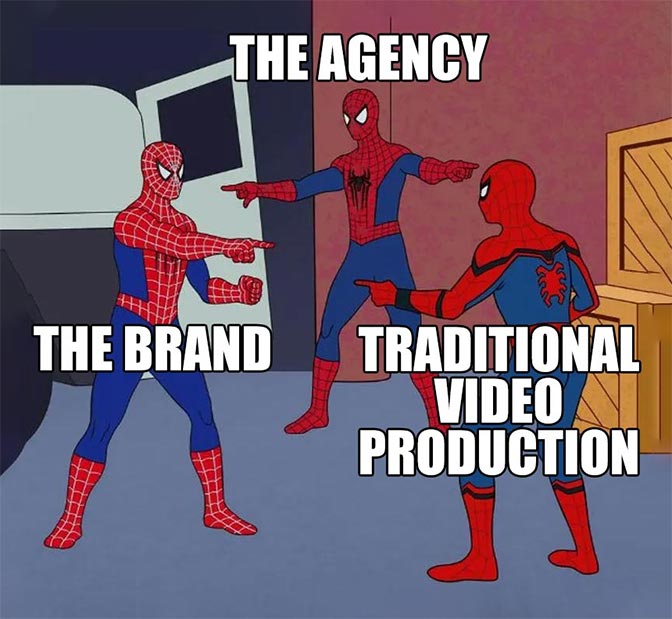
David Siciliano (28:22): Yeah. We want there to be a better conversation about what the video needs to do. We think there's a lack of that. Agencies are having one conversation, brands are having another, traditional video production is having a third. So we want to try to have a better conversation about what your video project needs to do.
Jessica Siciliano (28:40): And how can we do it?
David Siciliano (28:41): Cool. So we're going to bring on some really cool guests, talk about some of our takes on how to approach different things, and hopefully this becomes a nice resource for brands, agencies, and video production companies to have a better conversation about what their videos need to do.
Jessica Siciliano (28:58): And to know what to ask and what to look for with their video production company, or even in-house. Questions and conversations that need to be had now.
David Siciliano (29:10): Before anything's shot. Yeah.
Jessica Siciliano (29:12): Before any cameras are seen. See you soon.
David Siciliano (29:16): See you on the next one.
Subscribe
Read next
Prefer to read the argument, not the whole conversation? Here's the written companion: Why You're Wasting Money on One Big Video
You May Also Like
View All Posts ›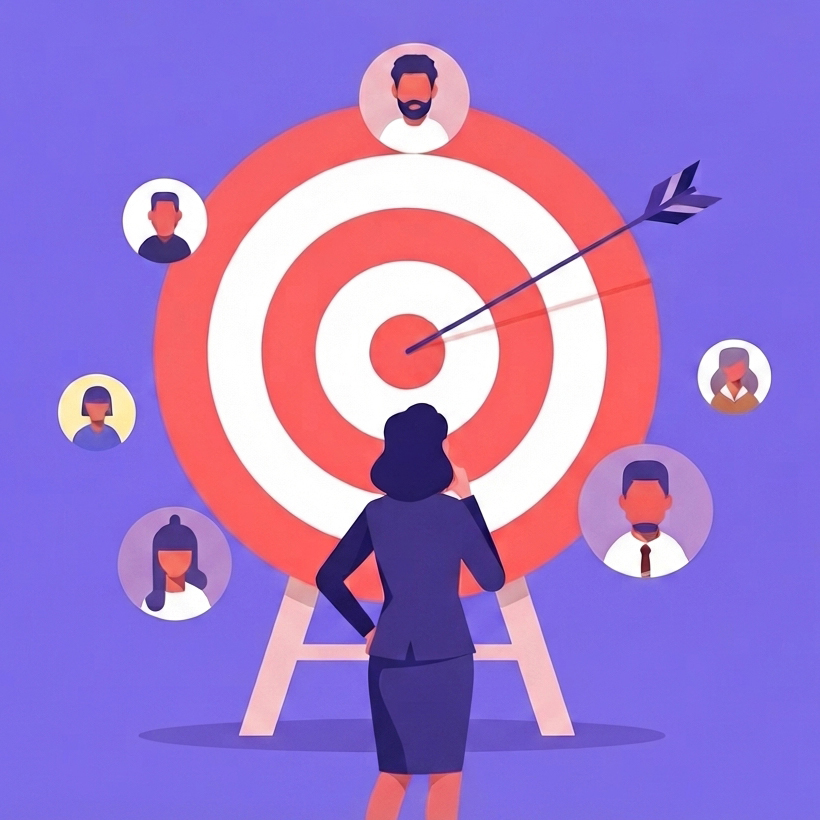

LET'S GET STARTED.
We'll show you exactly how to turn your upcoming events into content gold mines. No pitch deck, just strategy.
Book a Free Strategy Session